Here's what's on our plate today:
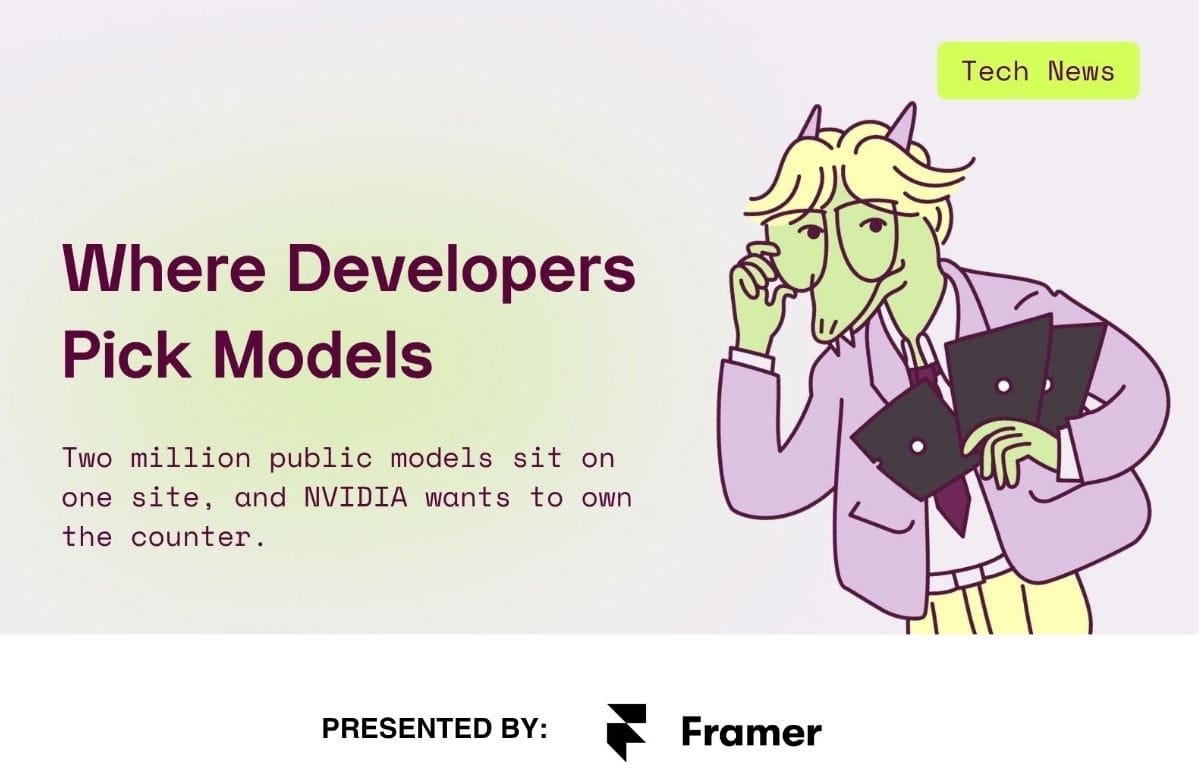
🛒 NVIDIA makes a bid for AI’s biggest model marketplace.
🍪 Anthropic preps for IPO; tech companies call for a defensive surge against AI-driven hacks; a court finds the Pentagon's measures against Anthropic illegal.
⭐️ Roko's Pro Tip: keep your own copy of the models you depend on.
Let’s dive in. No floaties needed.
Build and design your website on Framer - Now with Agents
*This is sponsored content
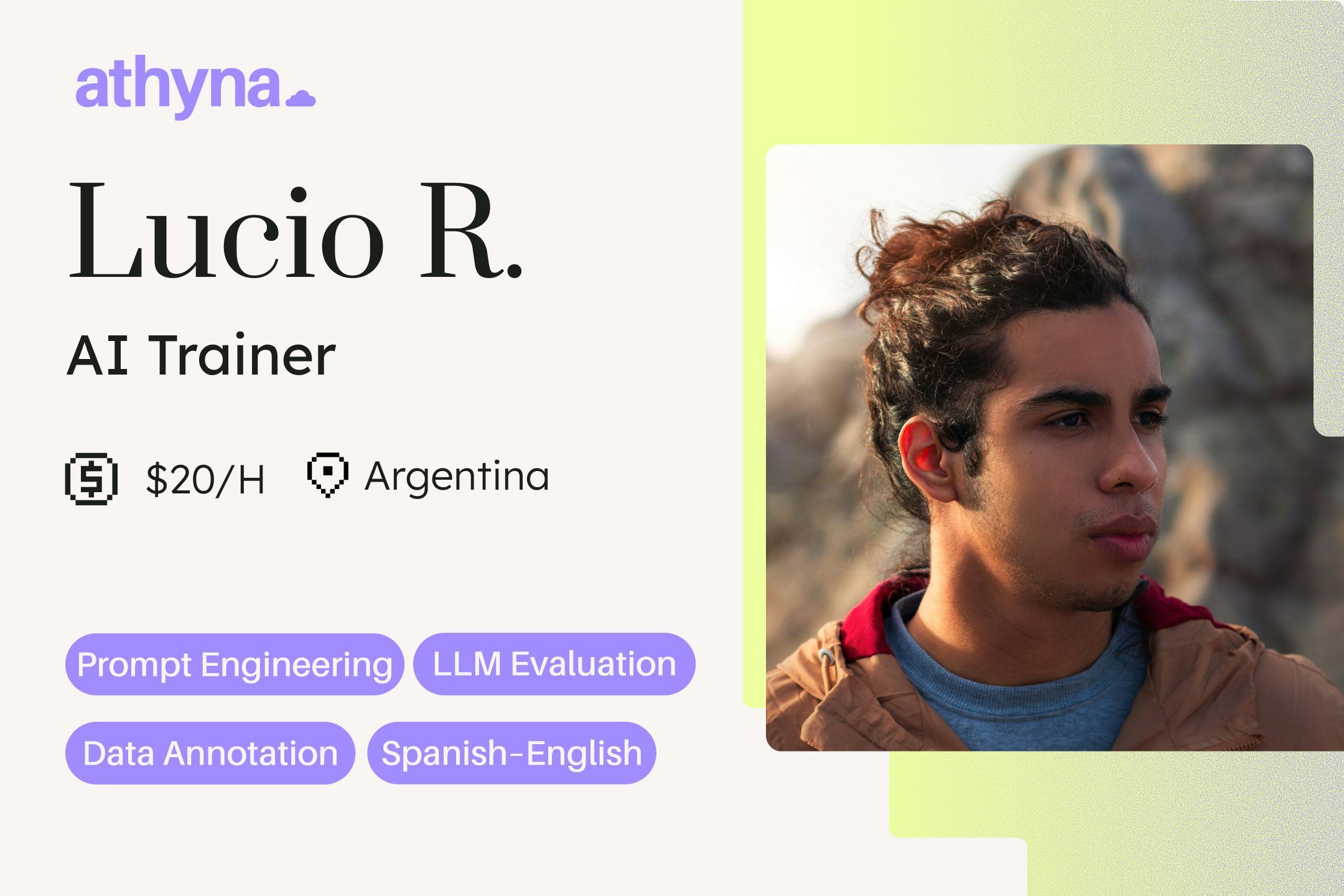
Label Faster. Train Smarter. Ship Better Models.
Multimodal models are only as good as the data behind them. Our trainers work across text, audio, and image pipelines—handling transcription, labeling, and annotation tasks with speed and consistency.
Audio transcription and speech data labeling
Image and video annotation for vision model pipelines
Multilingual coverage across Portuguese, Spanish, and English
*This is sponsored content
The Laboratory
TL;DR
The chipmaker that owns AI's factory floor is reportedly buying the shelf its products end up on.
Why buy the shelf: NVIDIA already makes the chips almost all AI runs on. Hugging Face is where developers go to pick which models they will actually build with, which is the last step before something gets chosen.
The leak it plugs: NVIDIA's four biggest customers, OpenAI, Google, Amazon, and Anthropic, are all designing their own chips. Its defense is a large open ecosystem of independent builders, and that ecosystem is distributed almost entirely through Hugging Face.
What the price admits: $12.9B against roughly $150M in annualized revenue is about 86 times income. Nobody pays that for a software business. They pay it for a position.
The catch: Hugging Face is worth what it is because it stocks chips from everyone, including AMD, Google, and Amazon. One owner changes that math.
The stakes: whether a neutral broker in AI can stay neutral once it belongs to a player, and whether a rival's model is still as easy to find on that shelf a year from now.
NVIDIA's $12.9B bid for the store where AI gets chosen
There is a particular kind of advantage in business that comes from owning more than one step between making a thing and selling it. A company that controls two links in that chain stops paying somebody else's margin at the handoff, and it also stops depending on that somebody to treat it fairly. Economists call it vertical integration, though the plainer description is that you own both the factory and the road out of it.
Tyson Foods is the clean example. The company contracts the farmers who raise the animals, runs the plants that process the meat, packages the result, and ships it to grocery stores, which gives it enormous say over how the American meat industry works and how it gets regulated. Every one of those steps ends at the same place, the grocery shelf, and that shelf belongs to somebody else. Now imagine Tyson buying Walmart. It would own the shelf too, and with it a say in which rival's chicken sits beside its own and at what price.
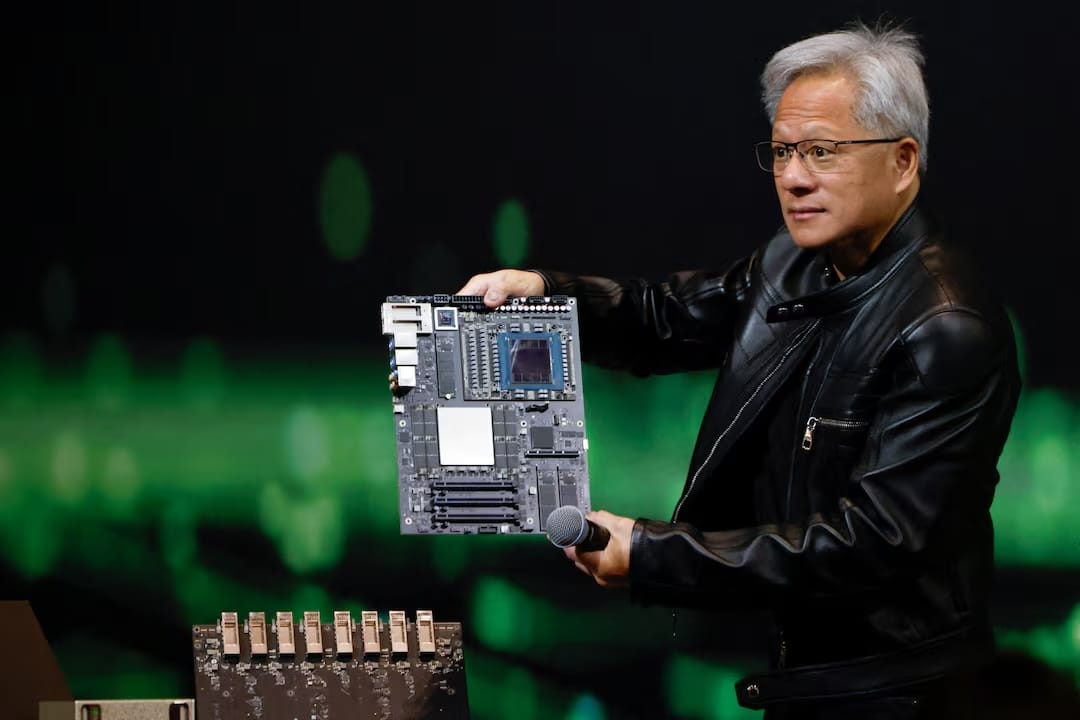
Nobody expects Tyson to buy Walmart. However, something with that shape is being negotiated in the AI industry right now, because The Information reported on the night of August 26, 2026, that NVIDIA has agreed to buy Hugging Face for $12.9B.
TechCrunch and Reuters carried the same figure that night from the same reporting, and neither company has said anything publicly since. Bloomberg described a separate set of talks valuing Hugging Face above $13B, with no signed agreement and a real chance of collapse. The deal is therefore reported rather than confirmed, which makes the useful question what NVIDIA would be getting for such a large sum.
The store that stocks every brand
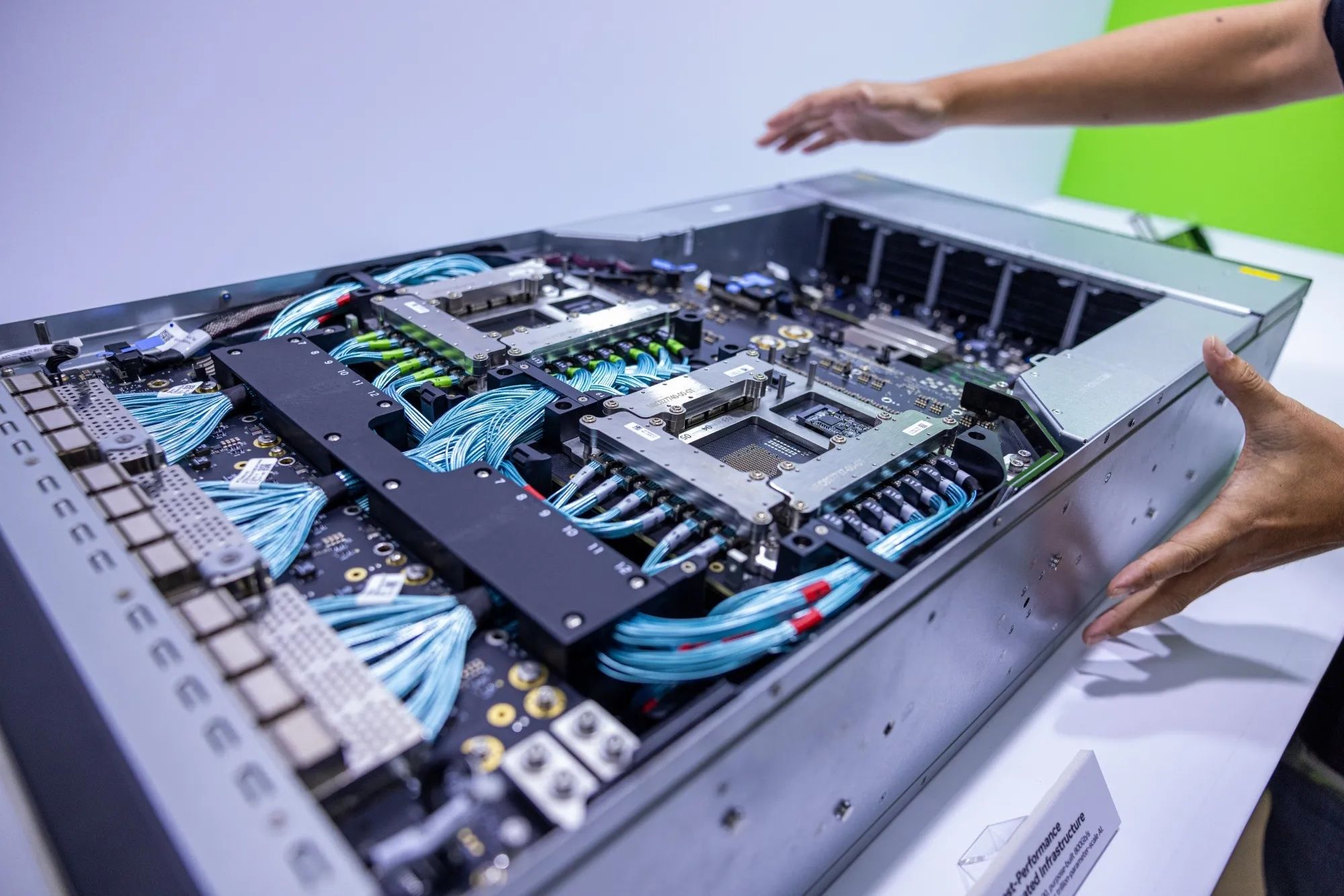
In the current setup, NVIDIA is the factory since its chips do the heavy computing that building and running AI systems requires, and almost nobody in the field builds anything serious without them. Hugging Face is the shelf. It is where developers go to browse, compare, and pick up the AI models they will actually work with, which puts it at the last step before a piece of software gets chosen and used.
The site started in 2016 as a chatbot app before becoming the place where AI researchers publish their work in the open, meaning the code and the trained model itself go out for anyone to download, inspect, and build on. By the company's own count, it holds more than 2M public models and over 500k datasets, the collections of raw information used to train them. The same count puts its main software library underneath more than 200k other software projects.
People in the industry call it the 'GitHub of AI', after the site where the world's programmers store and share code, and the comparison holds. What matters for this deal is that no chipmaker or cloud company owns it, since Google, Amazon, Microsoft, and NVIDIA's chip rivals all publish there alongside independent researchers. Like a grocery store, it earns its traffic by stocking everybody, which means that neutrality is the first thing an acquisition puts at risk.
The biggest customers are building their own supply
NVIDIA does not need Hugging Face to survive, because the company is in the strongest stretch of business it has ever had. It reported $96.2B in quarterly revenue, up 106% from a year earlier, and guided investors toward 70% growth next fiscal year, CNBC reported. That forecast landed on the same day as the acquisition reports, and it would leave NVIDIA behind only Amazon among large U.S. technology companies by revenue.
However, the four largest buyers on NVIDIA's books have started integrating backward into its own business. OpenAI is deploying a custom chip built with Broadcom, while Google is already on the eighth generation of its own. Amazon's custom chip business runs at a pace above $20B a year, and Anthropic has begun designing a chip with Samsung as its manufacturer, part of what Tom's Hardware calls a multi-chip strategy.
A supplier whose four biggest accounts have each opened a plant of their own is still shipping plenty of product, though it has lost the assumption that those accounts keep reordering. NVIDIA cannot stop any of the four from designing chips, which means that its defense has to run through everyone else who still buys.
Free models are how the supplier reaches everyone else
The logic of that defense works out as simple arithmetic. Developers who can pick from strong open models never have to rent their intelligence from OpenAI or Google, and whatever they pick instead still has to run on somebody's chips. NVIDIA sells more when the market stays spread across thousands of independent builders than when it narrows to a few labs that make their own hardware.
So NVIDIA has spent two years putting free product into the world, publishing open models called Nemotron that anyone can download. According to the company blog, it has uploaded more than 650 open models and 250 datasets to Hugging Face. In March 2026, it went further and formed the Nemotron Coalition with Mistral AI, Perplexity, Cursor, and other labs to build open frontier models together.
Every one of those free models has to reach a developer before it does NVIDIA any good, and the place developers look is Hugging Face. This is the Tyson problem, exactly: NVIDIA can make the product and give it away, and it still ends up on a shelf that belongs to somebody else. What $12.9B would buy is the shelf.
Washington sits behind the same question, because officials have spent months weighing restrictions on open models while worrying that Chinese labs would take the category instead. Hugging Face CEO Clem Delangue has argued NVIDIA's side of that fight, warning that China is "clearly dominating" open-source AI and co-signing an open-model letter with Jensen Huang, TechCrunch reported. Those rules determine whether this kind of product can be distributed at all, and a company that controls distribution has a stronger hand in writing them.
A second business runs through the same counter, since Hugging Face helps developers rent computing power to run the models it hosts. NVIDIA pulled back from its own cloud product last year, as Tom's Hardware described, so it would inherit a working rental operation rather than rebuild one. Owning both ends means NVIDIA earns from the same developer twice, once on the chips and again on the hours spent renting them.
Neutrality is the thing being bought
The Tyson comparison breaks in one place, and that break is where the deal gets complicated. A grocery store keeps its customers by stocking every brand, including the ones that compete with whoever owns the building. Hugging Face works the same way, since it hosts models built to run on chips from AMD, Google, and Amazon. Many of the companies relying on it are the same ones trying to buy fewer NVIDIA chips each year.
A store does not have to refuse a brand in order to hurt it, because the owner still decides what sits at eye level and what sits on the bottom shelf. On Hugging Face, that choice looks like which model comes up first in a search, which one arrives with a ready-made setup, and which one the site's own tools support best. A developer working to a deadline usually takes whatever runs with the least effort, which is how small changes on a web page turn into real hardware sales. The facts establish that the shelf would change hands, but they do not establish that NVIDIA has decided to move anything on it.
Hugging Face has already turned NVIDIA down once over this exact worry, refusing a $500M investment that valued the company at $7B, the Financial Times reported in January 2026. Its explanation then was that no single large investor should be able to sway what the company decides. An investor and a buyer create different problems, because an investor can push while the founders still hold the final say. A sale ends that arrangement in one payment, since the decisions themselves pass to the new owner along with the company. Delangue, the present CEO of Hugging Face, has described the company's duty to the developers who trust it with their models as a long-term one, speaking on TechCrunch's Equity podcast this month.
The price says what is really being bought
The number makes the point more plainly than anything either company has said about strategy. The Information put Hugging Face's annualized revenue near $150M, up from roughly $100M two months earlier. A $12.9B price is about 86 times that revenue, which is far more than the income can justify. NVIDIA would not be buying a software business at that multiple, since what the money actually buys is the position in the middle of how OpenAI models reach the people who use them.
Hugging Face is not the only company in that middle position changing hands this year, because Stripe agreed to buy OpenRouter for roughly $7B, TechCrunch reported. OpenRouter made its money helping developers choose between competing AI models, which is a smaller version of what Hugging Face does. Any purchase this size would also face ordinary antitrust review, and it arrives months after three senators asked regulators in February 2026 to scrutinize NVIDIA's run of AI deals.
The trade under discussion is easy to understand even without a signed agreement. NVIDIA would hand over cash it has in enormous supply for the one thing no chip factory can produce: a trusted relationship with the developers who decide, every day, what they pick up and what it runs on. Whether that relationship is simply a business NVIDIA is buying, or a piece of the ground the open ecosystem stands on, is what rivals and regulators will be working out. The thing to watch is the shelf, and whether a model built for a competitor's chip is still as easy to find there a year from now.
Roko Pro Tip
| 💡 If your build pulls models straight from a hub at runtime, you are renting your supply chain. Mirror the weights you depend on and pin the versions now. Ownership of a registry can change with a single press release, and your deployment shouldn't notice. |
Outperform the competition.
Tools & resources, ranging from playbooks, databases, courses, and more.
Deep dives on famous visionary leaders.
Interviews with entrepreneurs and playbook breakdowns.
*This is sponsored content
Monday Poll
📊 NVIDIA wants the shelf where developers pick their models. What happens to that shelf once it has an owner? |
|
Bite-sized Brains
Meme Of The Day
The Toolkit
Continue: Open-source AI code assistant for VS Code and JetBrains, with full control over models and context.
Chroma: Open-source vector database built for AI apps, fast to set up and easy to scale for RAG.
Together AI: Cloud platform for running and fine-tuning open-source models at scale, without managing GPUs yourself.
Rate This Edition
What did you think of today's email? |
|





.svg)
.svg)