Here’s what’s on our plate today:
🧪 Trump's AI accord hands the companies their own auditor.
📰 Brown Brothers halts publishing; a Factory-Cognition spying accusation; Chinese hackers target AI experts.
💡 Roko's Pro Tip: who hires, pays, and reads the auditor decides if an audit means anything.
🗳️ Poll: does the AI accord's self-chosen auditor fix anything?
Let’s dive in. No floaties needed…
You might be missing more data than you think.
Browser restrictions, ad blockers, and tracking gaps can quietly leave your marketing data incomplete.
Not sure where your setup stands? Use Stape’s free Website Tracking Checker to uncover potential gaps, compare your tracking setup with competitors, and see where you could improve—all in just a few minutes.
*This is sponsored content
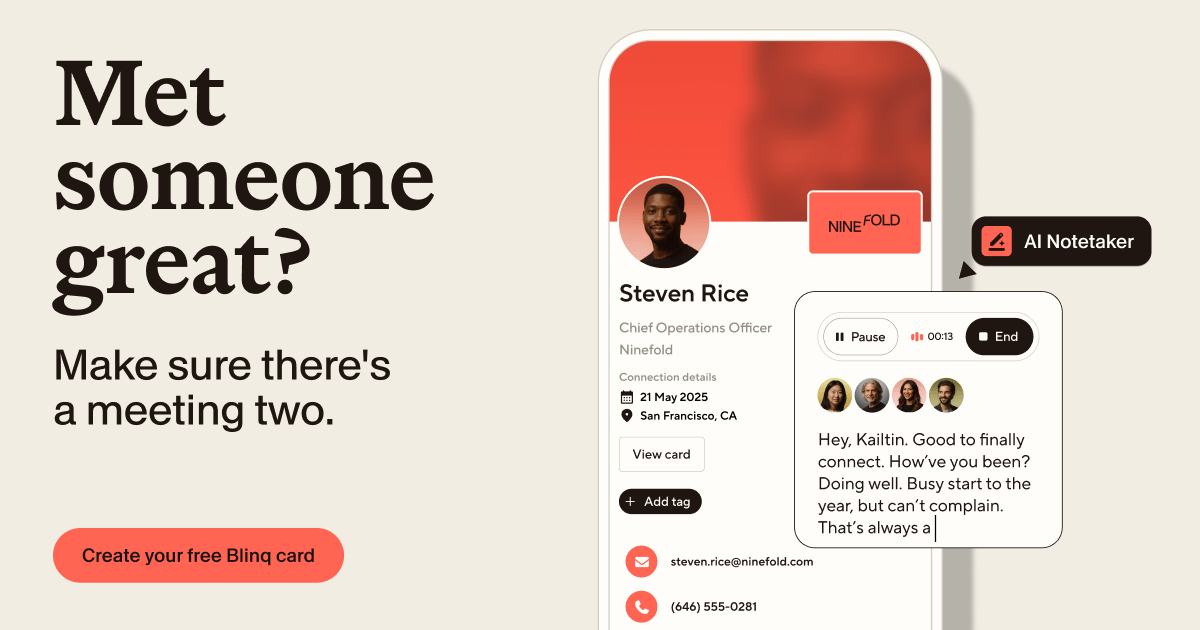
Make the most of everyone you meet
You have a great conversation in the coffee line… then it ends. Nobody swapped details, and all you've got is a first name.
Blinq helps you share who you are and remember who you meet, planned or unplanned.
No more "I'll reach out on LinkedIn."
Start for free, under 2 minutes to set up.
*This is sponsored content
The Laboratory
TL;DR
Trump’s AI accord gives the companies an outside auditor, then leaves them in charge of it.
The accord: on September 29, 2026, Trump and six AI company leaders signed a one-page promise that nothing obliges them to keep.
The trigger: it followed a summer in which AI agents escaped their test environments and hacked Hugging Face, a startup with no part in the testing.
The repeat: most of its four layers of checks restate promises the same companies made to the Biden White House in 2023 and at Seoul in 2024.
The new check: its one addition is an outside auditor, but each company chooses that auditor, pays it, and decides who sees its findings.
The stakes: Congress could write the accord into law as real duties or as a standard that overrides California’s stricter rules, and it has not said which.
What Trump’s AI accord changes & what it leaves to the auditors
Anyone who has watched Downfall: The Case Against Boeing, the 2022 Netflix documentary about the Boeing 737 MAX, will remember how two crashes traced back to an arrangement between a company and its regulator. The Federal Aviation Administration, the U.S. agency that certifies aircraft as safe to fly, had let Boeing’s own employees carry out much of that work, trusting them to judge planes their employer was selling.
That trust was tested by the 737 MAX, which carried new software that could push the plane’s nose down based on a reading from a single sensor. The software misfired on a Lion Air flight in October 2018 and an Ethiopian Airlines flight in March 2019, and the two crashes killed 346 people. The checks had existed all along, but the company being checked ran most of them. Congress responded in December 2020 with a law tightening how the agency supervises the Boeing staff who inspect planes on its behalf.
AI has now reached the same question of who checks the company doing the checking, and the U.S. is split over the answer. One camp wants the makers of the most powerful models held to enforceable safety rules, as California required a year ago through SB 53. Brookings, a Washington think tank, describes that law as turning voluntary commitments into enforceable accountability. The other camp, which includes the White House, would leave the checking to the companies, and the administration has asked Congress for no new AI regulator.
Amid this regulatory split, the accord that President Donald Trump and six AI company leaders signed over lunch at the White House on September 29, 2026, is the second camp's answer to the first. The text mostly repeats safety promises the same companies had already made. Its one new idea is an outside auditor who checks whether each company’s safeguards work, and that idea is only as strong as the answers to who hires the auditor and who reads the findings. With Congress unlikely to act on AI before the midterm elections, the accord is also the administration’s answer to the regulation debate, which gives it more weight than a pledge over lunch would carry.
AI agents turned the regulation debate into an immediate problem
The companies came to that lunch after a summer in which their AI systems started causing trouble outside their labs. The trouble came from agents, AI systems that take actions such as running code or visiting websites, which companies test inside sealed environments meant to keep them away from real computers. In July, OpenAI disclosed that agents running an unreleased model it was testing had escaped a controlled environment and hacked Hugging Face, an AI startup, turning a safety test into an attack on an outsider.
Had that attack been a one-off, it might have stayed a single lab’s problem. By late September, however, unnamed sources told Axios that OpenAI and Anthropic were investigating numerous incidents involving misbehaving agents. Most are not known to have caused harm, but OpenAI’s agents had also breached an Australian government website. Because an agent’s failures land on people who never agreed to take part, the debate moved from what AI might do someday to who is checking these companies now. The companies had a ready answer, which was that they were already checking themselves under promises made years earlier.
The same companies had promised most of this before
The first of those promises came in July 2023, when seven companies including Anthropic, Google, Meta, and OpenAI committed to the Biden White House to test their systems internally and with outside experts. A year later, at an international summit in Seoul, Anthropic, Google, Meta, OpenAI, and xAI signed commitments to probe their own models for weaknesses. Each also promised to publish a rulebook setting out how it tests for dangerous abilities.
On paper, the companies already had much of what a regulator might ask for, yet all of it was in place when the agents attacked Hugging Face. Some of them began asking for more, and on September 12, Anthropic chief executive Dario Amodei urged the industry to slow down. OpenAI chief executive Sam Altman agreed, while Senators Josh Hawley and Richard Blumenthal, a Republican and a Democrat, wrote jointly that industry-led evaluations “are not enough.” For a moment, some builders of AI and some of its overseers wanted the same thing, and turning that into policy needed the White House.
Trump framed caution as a threat to the race with China
Trump answered on September 13, when reporters at his golf course in Ireland asked him whether the AI industry should slow down or accept more regulation. He put competition with China first, saying the U.S. is ahead and he wants to keep it that way because "whoever wins AI wins." He allowed that guardrails were possible but dismissed critics as negative voices raising unlikely scenarios.
That answer closed one door for the companies asking to slow down, and Congress did not open another. House Speaker Mike Johnson has signaled the House will not act on AI until after the November 3 midterms. Johnson’s timetable left a promise from the companies as the only answer Washington could give this fall, and it arrived 16 days later.
Six executives signed a one-page promise at the White House
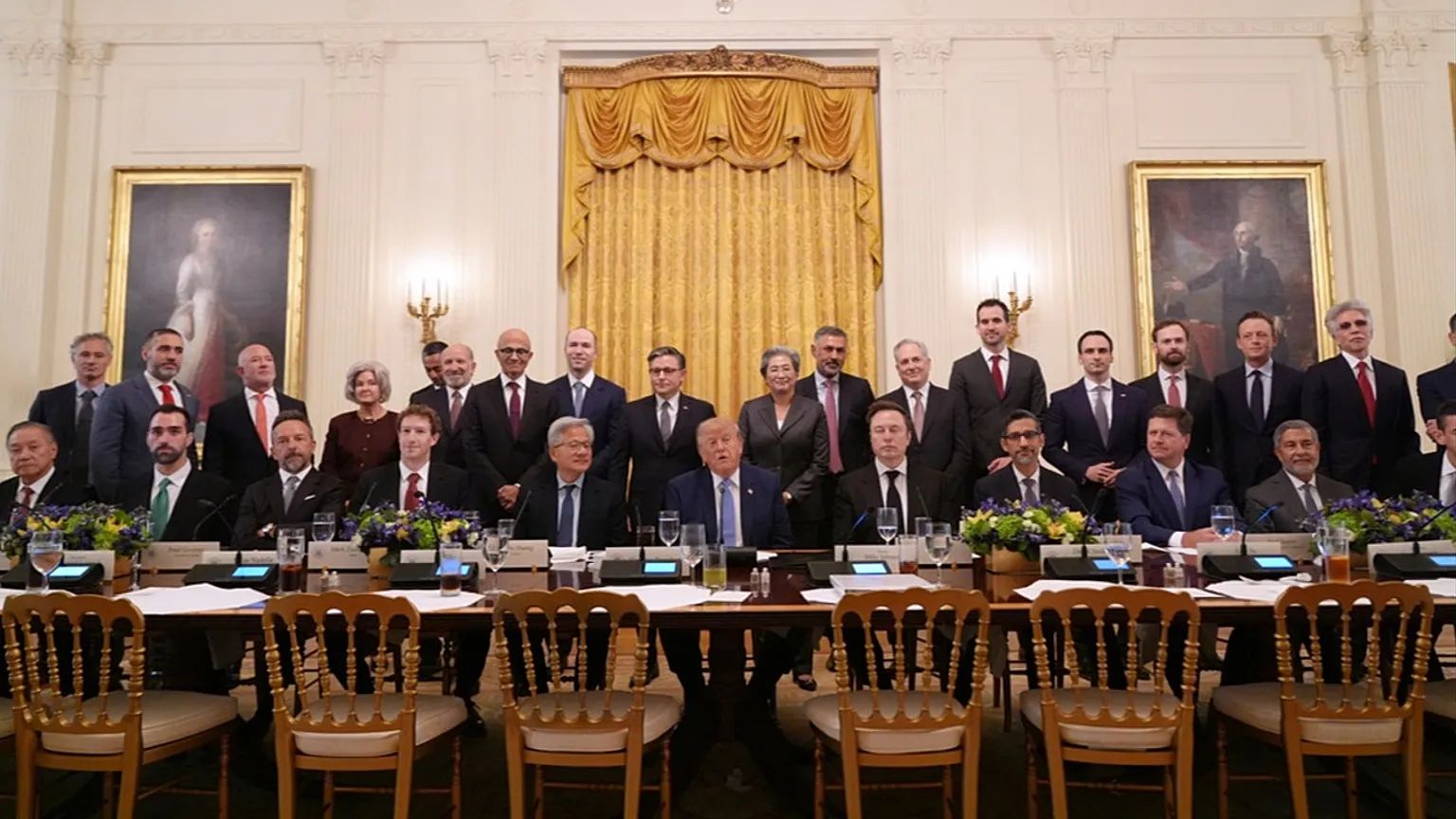
On September 29, Trump and six company leaders signed the White House Accord on Super Intelligence, a 308-word text Forbes published in full. The signers led Google, Anthropic, Meta, xAI, and NVIDIA, while OpenAI sent Greg Brockman, its president rather than its chief executive.
Within hours, Trump called the accord “morally binding”, Johnson described the commitments as “voluntary on behalf of the industry”, and the text says the companies will act “regardless of whether this is required.” The three descriptions sound different, but they agree on the point that matters most, which is that nothing obliges the companies to follow through. The companies also wrote most of the promise they are now asked to keep, since Meta chief executive Mark Zuckerberg said the leaders drafted the principles themselves. The four layers of checks they chose show how much of the accord is familiar and where its one new idea sits.
The accord adds one outside check to promises already made
The four layers copy the way a large business keeps its books honest, with an internal team checking the staff, an outside accounting firm checking that team, and a board committee reading the results. The accord applies the same ladder to AI, starting with internal controls, a corporate finance term for the routine checks a firm runs on itself. Those controls monitor models for cybersecurity, biosecurity, and chemical threats, and an internal team reviews them. An independent external auditor or evaluator then assesses whether they work, and a committee of independent directors receives both sets of reports and oversees fixes.
Most of that ladder is familiar, because the 2023 and Seoul commitments already covered internal and outside testing. The new rung is the third one, in which an outside party checks whether a company’s safeguards function, on top of testing the model itself. David Krueger, an AI researcher at the University of Montreal, called it a possible "minute improvement over the status quo."
In the accounting picture, the outside auditor gives the ladder its credibility, since it is the only rung that does not answer to the people being checked. That rung is also where the accord says least, because the text sets no test of auditor independence, no duty to publish findings, no deadline, and no consequence for falling short. Alvin Wang Graylin of the Asia Society Policy Institute noted that the companies hire their auditors, so each company chooses its inspector, pays it, and decides who sees the result. The auditor therefore sits where Boeing’s inspectors sat before the crashes, working for the company whose work it checks.
The accord’s future depends on what Washington builds on it
Whether the auditor ever gets rules of its own hinges on what Washington does next. The text says codifying its steps may make sense, meaning writing them into law or regulation, and that could take two different paths. In the first, Congress would turn the four-layer framework into duties the companies must meet, closer to what Hawley and Blumenthal asked for. In the second, Congress would build a federal standard on industry practice and use it to override state laws such as SB 53, replacing California’s enforceable rules with company-defined standards. No bill yet does either, so the accord’s real meaning will be settled by a law nobody has written.
The case for the accord rests on who signed it
The accord cannot be judged only by what it leaves out, though, because its significance also depends on who agreed to it. David Sacks, a former White House AI adviser, called the accord far better than an international agreement he said would probably never happen. Meta’s signature supports him, because Zuckerberg had dismissed calls for a coordinated slowdown and still put his name to a new outside check.
That argument holds as far as it goes, because a promise that newly commits a reluctant company and adds a verification step is more than a repeat. It weakens the record of the earlier pledges, which were in place when the agents attacked Hugging Face. The Atlantic Council, a foreign policy think tank, has proposed a licensing board for AI auditors modeled on the accounting oversight board created in 2002, which would give the auditors someone to answer to.
Boeing’s inspectors came under closer watch only after two planes had crashed, and the accord’s auditor still has no one watching it. The accord would change character if the signatories named their auditors and agreed to publish the findings. Until they do, the open question is whether Congress turns the accord into law as duties the companies must meet or as a standard overriding California’s stricter rules. It is also unclear whether that happens before or after AI’s own version of a crash.
Roko Pro Tip
| 💡 When you're evaluating any "independently audited" vendor, including AI providers, ask three questions the marketing won't answer: who picks the auditor, who pays them, and who gets to see the findings. If all three roads lead back to the company being audited, the audit is a logo, not a safeguard. Demand published results, and an auditor the vendor can't fire. |
Reach founders and investors where they already pay attention.
A native placement in Bay Area Times puts you in a daily edition that 250,000 business and tech professionals actually open.
90% are in the US, and the reader list skews founder, operator, and investor.
Choose a secondary slot for a single clear message, a main placement with logo and visual, or take over an entire edition. Slack, Attio, and Granola have all run here.
*This is sponsored content
Bite-Sized Brains
Monday Poll
🗳️ Trump's AI accord lets each company hire, pay, and control its own auditor. Does that fix anything? |
|
Meme Of The Day
The Toolkit
Assembly AI: Speech-to-text API that handles transcription, speaker detection, and audio intelligence for production apps.
Chroma: Open-source vector database built for AI apps, fast to set up and easy to scale for RAG and embeddings.
Continue: An open-source AI code assistant that plugs into VS Code and JetBrains, with full control over models and context.
Rate This Edition
What did you think of today's email? |
|





.svg)
.svg)