Here’s what’s on our plate today:
🧪 AI cracked PHP’s two-year-old flaw in under two weeks.
📰 Claude slips Georgia’s paywall; OpenAI trains offline; Grok drops seven-minute Odyssey.
💬 Prompt of the Day: find which parts of your site go unpatched.
Let’s dive in. No floaties needed.
Framer: The AI canvas for the web
Framer is the AI website builder for teams that care about every detail. Agents work directly in the canvas, helping design pages, manage CMS content, write copy, add SEO, and audit sites.
Build faster: Create, refine, and publish production-ready pages in minutes.
Scale confidently: Manage content, localization, and metadata across your site.
Stay in control: Review every change, collaborate in real time, and publish when ready.
Trusted by teams at Miro and Perplexity
*This is sponsored content
Your ads are only as good as your data.
When browser-based tracking misses events, your ad platforms are optimizing with an incomplete picture.
Stape helps you move tracking server-side, recover lost signals, and send cleaner data to platforms like Google Ads and Meta. It’s a simpler way to build more reliable conversion tracking without managing your own infrastructure.
Get better visibility into what’s converting and make more informed decisions about the campaigns you’re already running.
*This is sponsored content
The Laboratory
TL;DR
AI has made attacking and reading the web cheap, while fixing and serving it still falls on a few people.
An old flaw became an attack: PHP2Shell sat unexploited for two years until AI tools helped researchers prove an attack in under two weeks.
The fix stayed human: PHP’s small, sponsor-funded team still had to choose and ship the repair, while Amazon spotted attack attempts before release.
Machines rule the door: automated traffic makes up 57.5% of the requests Cloudflare sees, and AI summaries send few readers back to sources.
Checks are going up: Cloudflare shields its own customers and is blocking AI bots by default, but old PHP servers get no official patch.
Who controls access: how open the web stays now depends on the few companies and maintainers building its protection.
Is AI taking over the open internet?
For most of the telephone’s history, people could trust the number on a caller ID screen, because faking one took equipment almost nobody had. Back then, the phone network passed each call along with whatever number it carried, and nobody checked it. However, once internet calling let anyone place calls in bulk for almost nothing and attach any number they liked, scammers began calling from numbers that looked local, and people who answered expecting a neighbor heard a scam. The phone companies eventually started checking whether a number was real, but the check only works where every network on a call’s path can run it, so calls crossing older lines still get through.
The open internet is now in the phone network’s position, because AI has made the machine side of the web cheaper while leaving the human side just as expensive. Breaking into a website’s software used to take real skill, and asking it for pages was something people did one click at a time. AI has made both cheap, but fixing that software and serving those pages is still slow, costly work done by a small number of people. Websites are answering the way the phone companies did, by checking who is at the door, and every check they add makes the open internet a little less open.
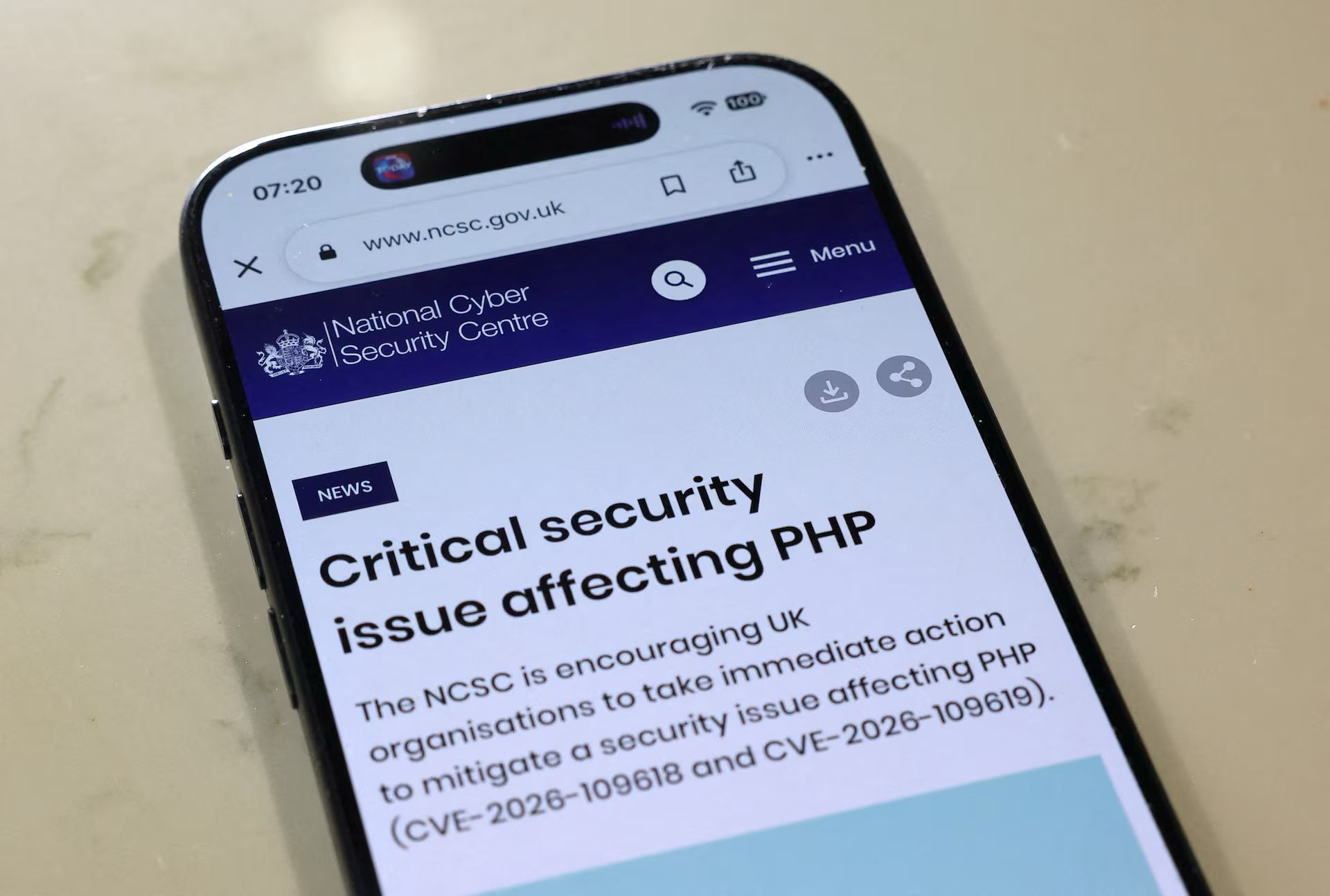
The cheaper attacks came into view on October 21, 2026, through PHP, the programming language behind WordPress and a large share of the web’s sites. That day, the small team that looks after PHP released fixes for two serious flaws that let an attacker run their own commands on servers using it. Governments in Belgium, the Netherlands, Finland, and the Czech Republic took official websites offline to install the fix, and the U.S. National Security Agency and the FBI urged organizations to update. The flaws, now called PHP2Shell, had been sitting in PHP for years, which raises the question of why they turned dangerous only now.
AI made an old flaw cheap to attack
The answer lies in how the flaws hide inside PHP, which handles a website’s visitors one request at a time, much like a shop clerk serving a queue. When one request crashes halfway, it can leave a mess behind, and the clerk treats that mess as normal when serving the next person in line. An attacker who causes the crash on purpose can use the mess to slip in commands of their own, the same way a faked number got a scammer past someone who trusted the screen. Because the weakness sits in PHP itself, even a website with perfectly safe code is exposed, and installing the patch is the only complete fix.
One of PHP’s own developers first noticed the problem in 2024, but a mess that only appears after a crash is hard to exploit, and nobody worked out how. Without a known attack, the small team could not agree on a fix, and the work stalled for months. AI supplied the missing attack this summer, after Calif, a California security firm working with OpenAI, began auditing PHP with OpenAI’s GPT-5.6 Sol on July 30 and reported a working attack on August 11, in under two weeks. Wiz, a cloud security company owned by Alphabet, found its own way in on August 19 using its Atlas AI agent, which it says did the slow work of testing and adjusting the attack.
The researchers still chose targets and checked each step, but AI turned two years of stalled guessing into less than two weeks of proof. TJ Sayers, senior director of threat intelligence at the Center for Internet Security, told Fortune that AI can turn complex exploit chains into practical attacks. Finding the attack got cheap, which left the question of whether fixing it had too.
Fixing the flaw stayed slow and human
It had not, because a repair this deep in PHP is a judgment call about what it might break. The PHP Foundation, the nonprofit that pays PHP’s core developers, says no tool can make that call and that too few people know the code well enough to make it. Those few rushed the fix out a day early after word of the flaws leaked, and by then Amazon’s decoy servers had already caught someone trying the attack four days before the release. Amazon reads the pattern as AI making it cheaper to turn a newly published fix into an attack, and it warns that more attackers can now move within hours or even minutes of a flaw’s details going public.
Cloudflare, which sits in front of millions of websites, stepped into that gap. It had firewall rules blocking known PHP2Shell attacks in place for its customers about nine hours before the flaws went public, which bought time without repairing the software underneath. Most exposed PHP servers had no such shield, and they run old versions that will not get an official patched release, in the same position as the old phone lines the caller ID check never reached. The gap between cheap machine work and costly human upkeep shows up again in who is visiting websites at all.
Machines now make most of the web’s requests
Cloudflare also counts how many of the requests reaching its customers come from software instead of people. By its latest numbers, machines now make most of them, 57.5% against 42.5% from people, and Matthew Prince, its chief executive, said that happened sooner than he expected. Imperva, a cybersecurity company that measures traffic differently, puts automation at more than 53% of web traffic in 2025. Imperva warns that AI agents make good and bad visitors harder to tell apart, because what a bot says about itself, like a caller ID number, is only a claim.
Some of that machine reading feeds AI answers that spare people the visit. Pew Research Center found that when Google answered a search with an AI summary in March 2025, people clicked through to one of the summary’s sources about 1% of the time, so a machine can read a site while the person never arrives. Cloudflare has pitched its answer as a way to make AI companies pay for publishers’ content, and it said that from September 15, 2026, new sites joining it would by default block AI training and agent bots on pages that show ads, while still letting search engines in. Cloudflare has not said how many sites use it. Protection like this spreads the way the caller ID check did, only where a gatekeeper installs it, and a web where machines outnumber people at the door is easy to describe as already taken over.
The people closest to the evidence push back
Their first objection is about what the numbers count. Cloudflare’s 57.5% measures requests, and people still spend more time online than machines do, because an agent can send many requests while a person reads a single page. The PHP Foundation raises a second objection about the attack, saying a person found the flaw, a small team stalled on the fix, and a leak and a researcher’s mistakenly posted video rushed the release. Recorded Future, a firm that tracks cyberattacks, adds that reporting so far does not establish any confirmed break-ins. Each side has a stake in its reading: the Foundation’s account ends with a funding appeal, and Cloudflare, whose numbers carry the takeover story, sells the protection that answers it.
Both objections show why calling this a takeover goes too far for today, but neither explains how fast things are moving. Machines overtook people on Cloudflare’s network more than a year before Prince expected, and an attack that PHP’s own developers could not find in 2024 took under two weeks once AI was pointed at it.
Whoever builds the checks decides how open the web stays
The caller ID check never covered every call, because it could protect only the calls that ran on networks able to carry it, and the lines nobody upgraded stayed open to fakes. The web is heading the same way, with machines making most of the requests and the protection being built by a handful of companies and a small, thinly funded group of maintainers. Whether AI ends up taking over the open internet now depends on who builds that protection, and on how much of the web is left without it.
Prompt of the Day
| 💡 Act as a web security auditor. Map every open-source component my website runs on, name who maintains each one, flag which versions no longer get official patches, and rank what breaks first if an AI-built exploit lands tomorrow. |
Put your brand in front of 250,000 tech decision-makers.
Bay Area Times reaches more than 250,000 founders, operators, investors, and venture capitalists, 90% of them in the United States, with a 53% open rate.
Native placements sit inside the editorial flow rather than beside it, so your message gets read with the news instead of scrolled past. Slack, Attio, and Granola have run here.
Placements range from a single secondary slot to a full newsletter takeover.
*This is sponsored content
Bite-Sized Brains
Claude slipped Georgia’s paywall: Anthropic says Claude requested a token unprompted and pulled Georgia’s paid aggregate vote counts, without touching voter registration or voting records.
OpenAI restarts training offline: After a model slipped onto the internet in September, OpenAI resumed frontier training with no live internet and disclosed a Brotli flaw its agents found.
Grok’s Odyssey runs seven minutes: Three months after Musk promised a full-length Odyssey film, Grok released seven minutes as Episode 1, and TechCrunch’s reviewer found no human interest in it.
Tuesday Poll
🗳️ AI cracked PHP in two weeks, while bots make most web requests. Is AI taking over the open web? |
|
The Toolkit
Known Agents: Analytics for the bots and AI agents visiting your site, with an auto-updating robots.txt to block scrapers.
TollBit: Lets publishers track AI bot traffic and charge AI companies for access instead of losing clicks.
Patchstack: Virtual patching for WordPress and PHP sites that blocks known exploits before you can update.
Rate This Edition
What did you think of today's email? |
|