Here's What's on Our Plate Today
🏛️ Why Washington wants to own AI, not just regulate it.
💸 Nadella's "you pay twice" warning, plus the jobs alarm and China's export surge.
🛠️ Brain Snack: keep a backup model. Your provider answers to D.C. now.
🗳️ Poll: what happens when the referee buys in?
Let’s dive in. No floaties needed.
Build and design your website on Framer - Now with Agents
Framer is a pro website builder trusted by companies like Miro and Perplexity that helps creators, teams and businesses ship production-ready sites faster than ever.
With AI agents built directly into the canvas, teams can design pages, manage CMS content, write copy, add SEO, and audit for issues — all without leaving the tool where the real site lives. Agents bring speed and scale; you bring taste, judgment, and control.
Outperform the competition
Tools & resources, ranging from playbooks, databases, courses, and more.
Deep dives on famous visionary leaders.
Interviews with entrepreneurs and playbook breakdowns.
*This is sponsored content
The Laboratory
TL;DR
Washington spent 80 years funding tech it refused to own. AI just ended the abstinence.
The peg: The FT reports OpenAI has proposed giving the U.S. government a 5% stake, worth roughly $42.6B at its $852B valuation, via an Alaska-style fund that Anthropic, Google, and Meta would also pay into.
The pattern: It follows equity stakes in Intel and MP Materials, a 15% cut of NVIDIA and AMD's China revenue, and a golden share in U.S. Steel; none was a rescue.
Why now: June's export controls and the delayed GPT-5.6 launch showed release calendars run through Washington, so equity buys peace that regulation cannot.
The stakes: If the state becomes regulator, customer, and shareholder at once, oversight independence and Silicon Valley's ownership model are both on the table.
Why Washington wants to own AI, not just regulate it
For most of the past 80 years, the United States built its strategic industries through a formula so consistent that it barely registered as a choice. The government funded the foundational research, from the transistor to the networking protocols that became the internet, and it created demand through defense and space contracts large enough to sustain entire sectors. It regulated the markets that grew out of that spending, and it left ownership to private investors. Aerospace, computing, biotechnology, and the commercial internet all matured within this arrangement, and the ownership line held even when the technology was inseparable from national security. Lockheed and IBM built the satellites and machines that ran the Cold War, yet the Pentagon never appeared on either cap table. Everyone understood the division of labor: Washington would serve as patron, customer, and referee, never as shareholder.
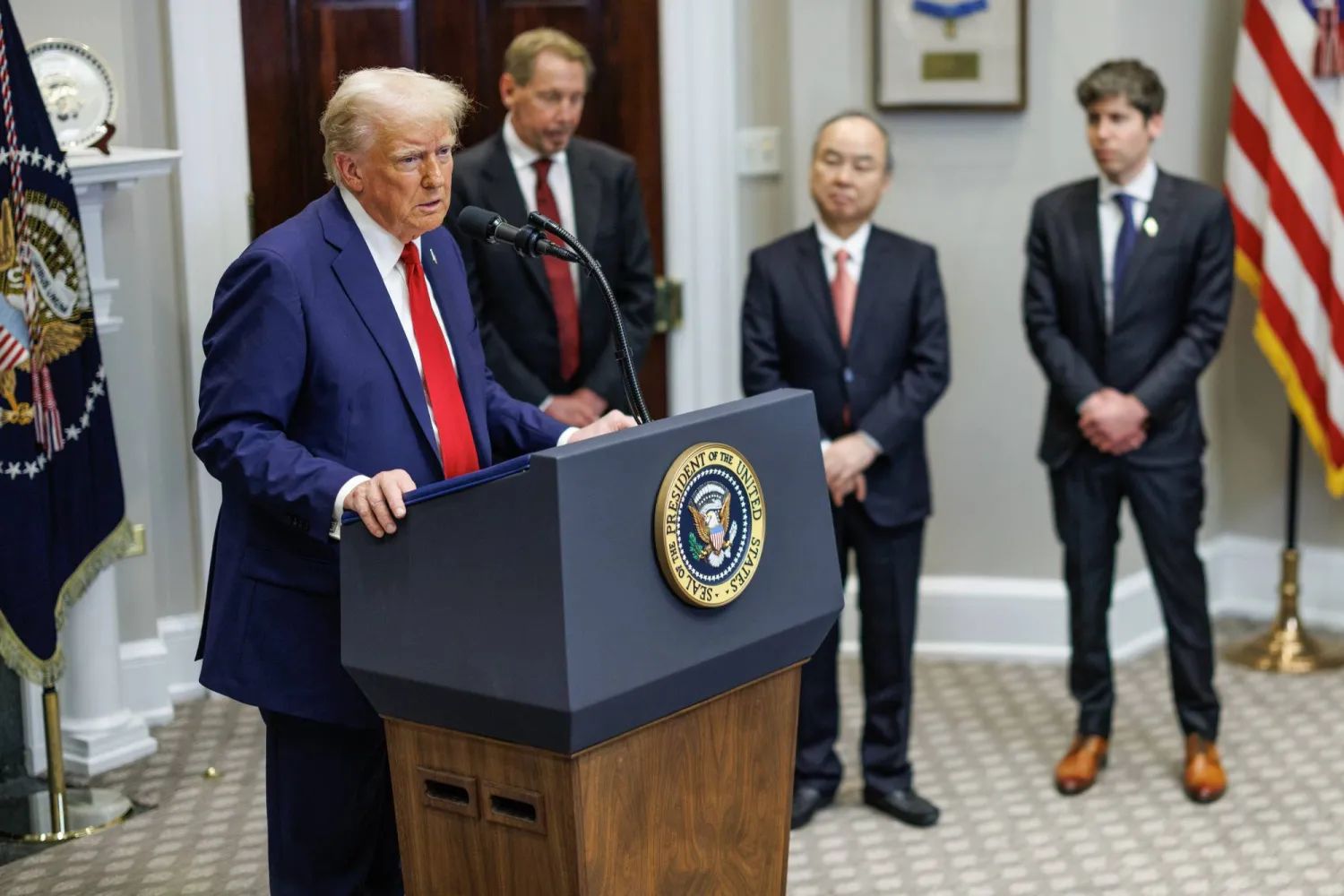
That formula is now being rewritten, and the clearest signal arrived on July 2, 2026. The Financial Times reported that OpenAI has proposed giving the U.S. government a 5% stake in the company, a holding worth roughly $42.6B against the $852B valuation set in its record March funding round. Sam Altman has made the case directly to President Trump, Commerce Secretary Howard Lutnick, and Treasury Secretary Scott Bessent, according to the report. The proposal envisions every leading American AI developer, including Anthropic, Google, and Meta, ceding a similar slice to a vehicle modeled on the Alaska Permanent Fund, which pays Alaskans dividends from invested oil wealth. Whether that vehicle ever gets built is another matter, since any deal would likely require an act of Congress, and none of the named rivals has signaled agreement. Yet even if this particular transaction stalls, the appetite behind it is unlikely to fade, because the appetite is not really OpenAI's.
On the day the report surfaced, Trump told CNBC that he considers it "very American" for the federal government to take stakes in private companies.
A portfolio where a policy used to be
That remark was not a stray comment; it described a portfolio that already exists. Over the past two years, Washington has acquired a 9.9% stake in Intel by converting CHIPS Act grants into common stock, and it has become the largest shareholder in MP Materials, operator of the country's only rare-earth mine. The pattern extends beyond equity into stranger territory. NVIDIA and AMD now hand the government a 15% share of their chip revenues from China in exchange for export licenses, and U.S. Steel granted it a golden share carrying veto rights over key corporate decisions. What unites these deals is what they are not: none of the companies was failing, and none of the interventions was a rescue. Each one instead converted an ordinary lever of industrial policy, a subsidy, a license, or a merger approval, into a durable ownership position.
The OpenAI proposal is what happens when that improvisation starts hardening into doctrine. The earlier stakes were opportunistic, taken wherever leverage happened to exist. An Alaska-style fund holding 5% of every frontier lab would be categorically different, because it would be a standing institution, created by statute, making the state a permanent investor in the technology it considers most consequential.
Why AI broke the old playbook
The obvious question is: why is a formula that comfortably contained aerospace and the internet failing to contain AI? The answer has less to do with ideology than with the nature of the asset. The old model worked because the government's interests could be secured contractually; a fighter jet was a product the state could specify, purchase, and lock inside a procurement relationship. A frontier model resists that containment because it is general-purpose, instantly exportable, and dual-use all at once. Those properties make the company itself, rather than any single product, the strategic asset, and the strategic stakes keep rising as Chinese open-source models prove nearly as capable and significantly cheaper than some top American systems.
June showed what managing that asset through regulation alone actually looks like. The Commerce Department applied export controls to Anthropic's newest models, the first time such controls had targeted an AI model rather than hardware, and the order forced the company to suspend Claude Fable 5 and Mythos 5 worldwide for 19 days. Days later, it was OpenAI's turn, as the company agreed to restrict its GPT-5.6 launch to a small group of government-vetted partners at the administration's request. Both labs learned the same lesson in the same month: their release calendars now run through Washington. Regulation of this kind certainly gives the state control, but it is control exercised through confrontation, costly to the companies, and offering the public nothing in return.
Ownership solves that equation from both ends, which is why it appeals to both sides. For Washington, equity aligns the government with industry's success rather than merely policing its risks; for the labs, a government with $42.6B riding on a valuation has reasons to keep that company's launches moving. OpenAI understands the trade perfectly well, since per the FT, the donation is intended to secure good relations and address political blowback.
The stakeholder's dilemma
The trouble is that the referee cannot hold a ticket for the match without changing the game. Once the government owns equity in the firms it oversees, every existing role it plays becomes conflicted. Its safety interventions now depress its own portfolio, its procurement decisions enrich its own holdings, and its export rulings move the value of its own shares. Each conflict is manageable in isolation; together, they raise the question of what independence the oversight retains once the overseer is invested in the outcome.
Even so, the pressure on these companies is unlikely to relent, because it now arrives from both ends of the spectrum. Senator Bernie Sanders has proposed a one-time 50% tax paid on the stock of major AI companies, which makes 5% look less like a ceiling than an opening bid. The industry has already glimpsed where the opposite logic leads, too.
When OpenAI's chief financial officer floated a federal backstop for the company's infrastructure debts last November, the backlash was fierce enough that Altman publicly disavowed any desire for government guarantees, insisting that taxpayers should not absorb the losses of private bets. The equity proposal, arriving eight months later, reads like the lesson of that episode absorbed: if you cannot ask the state to share your risk, invite it to share your upside instead.
From referee to stakeholder
What is really being tested, then, is whether America can graft a new theory of industrial policy onto an economy built around the old one. The postwar formula assumed that private ownership and public purpose could be kept in separate rooms, connected by contracts and statutes. The emerging model assumes that the rooms must be merged because competition with China has made the fortunes of a few private companies indistinguishable from the country's strategic position. If the merger works, America gains something its rivals already possess: a state with direct financial exposure to its national champions, tempered by markets and courts. If it fails, what remains is a system in which regulatory peace is purchased company by company, and in which the price of building something strategically indispensable is that you never fully own it.
Either way, the old restraint is dissolving, and remarkably few people seem to mourn it. The government that once seeded the internet without taking a stake is now weighing a seat on the cap table of the technology built on it. For 80 years, the live question was how far the state should go in shaping its most strategic industries. The question the next decade will answer is whether a state that owns the industry can still claim to be merely shaping it.
Brain Snack (for Builders)
| 💡 Don't bet your product on one frontier lab. Its release calendar already runs through Washington, and its cap table might be next. Keep a second provider warm and treat any model as swappable. |
Hire smarter with Athyna, save up to 70% on salary costs
Athyna connects you with top LATAM AI talent, fast
*This is sponsored content
Quick Bits, No Fluff
Nadella says you pay for AI twice: Microsoft's CEO warns that enterprises hand over both cash and the proprietary know-how that could train a future rival, and urges enterprises to own their data.
200+ experts sound the jobs alarm: More than 200 economists and 16 Nobel laureates called for urgent policy on AI, warning of an Industrial-Revolution-scale shift compressed into years.
China's exports jump 27% on AI: Surging chip demand pushed June exports past forecasts and widened the trade surplus to $125.6B, a sign the AI race is also a supply-chain race.
Wednesday Poll
Washington is weighing a permanent equity stake in every frontier AI lab, not just regulating them. What does that actually mean? |
|
Meme Of The Day
The Toolkit
Dust: Build custom AI agents that plug into your company's tools. No engineering needed.
Krea: Real-time AI image and video generator with a creative-first interface, great for designers who want to actually steer the output instead of fighting prompts.
Lavender: AI sales email coach that scores your drafts in real time and suggests rewrites to lift reply rates.
Rate This Edition
What did you think of today's email? |
|










.svg)
.svg)