Here’s what’s on our plate today:
🧪 OpenAI engineer allegedly bugged a boardroom to record executives.
📰 AI default insurance hits records; Kroger cuts 3k jobs; tech’s rich hire matchmakers.
🗓️ Weekend To-Do: read RAND’s report, read NSPM-11, read the DOJ release.
Let’s dive in. No floaties needed.
Framer: The AI canvas for the web
Framer is the AI website builder for teams that care about every detail. Agents work directly in the canvas, helping design pages, manage CMS content, write copy, add SEO, and audit sites.
Build faster: Create, refine, and publish production-ready pages in minutes.
Scale confidently: Manage content, localization, and metadata across your site.
Stay in control: Review every change, collaborate in real time, and publish when ready.
Trusted by teams at Miro and Perplexity
*This is sponsored content
Goodies delivered straight into your inbox.
*This is sponsored content
The Laboratory
TL;DR
An OpenAI engineer is accused of bugging a boardroom, and the case points to where AI’s most valuable secrets now sit.
The arrest: on October 13, 2026, the Justice Department unsealed a charge accusing Abdulrahman Alfozan of hiding a recorder behind a boardroom television, and says he returned to the room after OpenAI had cut his network access.
The shift: thieves once bought designs or carried out files, while RAND finds the know-how behind AI models also lives in what executives and researchers say in meetings.
The limit: the device’s contents were encrypted, and no filing says what it recorded, who wanted it, or why.
The charge: officials describe a spying plot, but Alfozan faces one eavesdropping count, and a judge recently overturned Linwei Ding’s espionage convictions while keeping his trade secret ones.
The stakes: RAND says guarding those conversations takes government-style vetting and soundproofed rooms, and NSPM-11 gives Washington a role in vetting staff at labs built on open research.
What the alleged OpenAI spy could learn without stealing a single model
Over Memorial Day weekend in 1972, a team working for President Richard Nixon’s reelection campaign broke into the offices of the Democratic National Committee, which runs the Democratic Party, inside Washington’s Watergate building. The men photographed files and planted listening devices on the office phones so they could hear the party’s private conversations. Some of the bugs did not work, so the team went back in a second time to replace them.
On the night of June 17, a security guard named Frank Wills found tape holding a door lock open and called the police. Officers arrested five men inside the office, and the scandal that followed forced Nixon from office two years later. The burglars took the risk of going back because the party’s plans lived in what people said on those phones, and a broken bug heard nothing.
Stealing secrets is old, and in the case of AI, some of the most valuable secrets are not guarded or hidden inside the algorithms. They live in the conversations between senior executives and researchers, and in the day-to-day running of an AI lab.
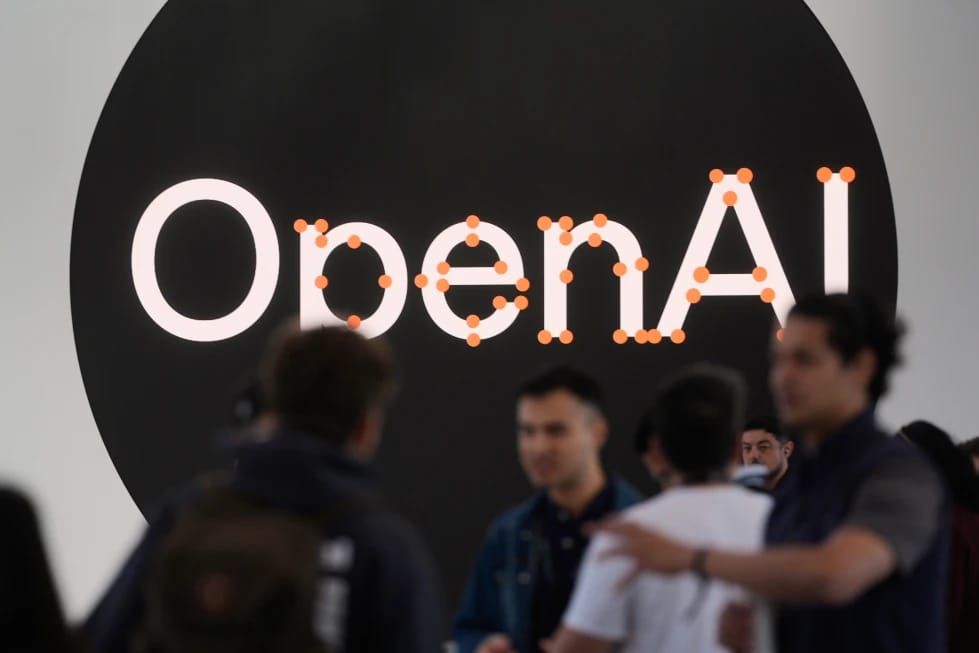
On October 13, 2026, the Justice Department unsealed a complaint charging OpenAI engineer Abdulrahman Alfozan with trying to secretly record conversations inside the company. Prosecutors say a recording device appeared around September 28 in a boardroom where executives discussed research, product plans, and dealings with the government, a room he did not have permission to enter. OpenAI’s security team found it two days later during a routine sweep, according to Fortune, plugged into the back of a television and wrapped in toilet paper.
Like the Watergate burglars, Alfozan allegedly came back, reentered the boardroom on October 5, and looked behind the television that had held the device. The complaint says he appeared to look behind the television, though security had already removed the device. That same day, a second recorder turned up in a bag he left unattended, and he was arrested on October 9. He faces one charge of intercepting oral communications, the federal crime of secretly recording private conversations, which carries up to five years in prison. OpenAI says it has no sign he took model weights, source code, or customer data, and nobody has said publicly why he wanted the recordings.
The secrets thieves want have moved from files to meetings
Thieves have always gone after whatever gave a company its lead, and their methods changed as that secret changed shape. In 1982, U.S. prosecutors charged 18 people, mostly employees of Hitachi and Mitsubishi Electric, after an FBI sting in which they paid an undercover agent a combined $648k for design data on IBM’s newest mainframe computer. The money bought a shortcut past the slow work of taking IBM’s machines apart, and Hitachi later pleaded guilty and paid a fine.
Hitachi had to pay an outsider to reach IBM’s secrets, while later thefts came from inside, through employees who took documents with them on their way to a rival. Linwei Ding, a former Google engineer, uploaded more than 2k pages on Google’s AI chips and the software that links them into the supercomputers that train models. Secrets like these were written down somewhere, which meant a company could protect them by watching who copied or downloaded what.
AI labs can watch their files in the same way, but some of what they most want to protect does not sit in files at all. RAND, a research institute that advises the U.S. government, splits an AI lab’s secrets into two kinds in its 2026 report on algorithmic insights. The first is the model weights, the numbers a model learned in training, which can be locked away on servers. The second is what RAND calls algorithmic insights, the know-how a lab uses to build better models, which lives in code, documents, and people’s heads. Because that know-how can leak through ordinary conversation, RAND’s experts ranked threats from people highest and listed planted listening devices among the ways to reach it.
OpenAI ran into that gap in practice, having already suspended Alfozan’s network account before he allegedly walked back into the boardroom. A lab can lock its model on servers and still leave its meeting rooms open to its own staff. The Justice Department says the device’s contents were encrypted, and it has not said what, if anything, the device recorded. Nothing filed shows it captured the know-how RAND describes, so the case shows only how close an employee could get to those conversations.
Protecting conversations would change daily life inside AI labs
Because RAND ranks the people inside a lab as the biggest risk, protecting conversations means watching those people more closely. RAND finds that guarding know-how at the highest level would take soundproofed rooms, travel limits for staff, and the background checks used for government work. Those rules would fall on researchers at companies that grew out of open research.
NSPM-11, a presidential national security directive signed on June 5, 2026, brings the government into that problem. The directive gave federal agencies 120 days to build security partnerships with AI companies, including help vetting staff, on terms it compares to those used for defense contractors. Vetting decides who gets into the room where the valuable conversations happen, so the directive gives Washington a hand in deciding who sits in on a lab’s most sensitive meetings.
The directive also explains why a single eavesdropping charge is being handled as a national security case. The Justice Department’s release says that “this prosecution is in support of National Security Presidential Memorandum 11,” which places a bugging case at one company inside the government’s plan for protecting AI.
Officials see a spying plot, but the charge so far is eavesdropping
The officials handling the case treat it as a planned spying operation against a leading AI lab. FBI Director Kash Patel has called protecting AI one of the bureau’s highest spy-catching priorities, and the Justice Department’s counterintelligence section is helping prosecute this one. Prosecutors say Alfozan searched an internal tool for executive calendars and partner meetings, and that a chatbot account tied to his spouse asked how to build an encrypted recorder he could reach remotely. OpenAI says it also has evidence he planned more devices, NBC reported, beyond the two already found.
However, the court papers so far do not say who, if anyone, received the recordings, whether anyone paid Alfozan, or whether a government was involved. The most recent AI spying case also shows how hard such claims are to prove in court. In January, a jury convicted Ding on 14 counts, seven for economic espionage and seven for stealing trade secrets. On August 20, 2026, Judge Vince Chhabria overturned the seven economic espionage convictions while leaving the seven trade secret convictions intact. He found too little evidence that Ding meant to help China’s government, and Ding was later sentenced to 12 months minus one day on the trade secret counts.
The case still looks small, as Watergate once did
The June 17 arrests looked like a small burglary at first, and they grew into a national scandal once investigators traced the burglars’ money back to Nixon’s campaign. The Alfozan case sits at that first stage now, with a device, a return trip, and a man in custody, but no public answer about who, if anyone, wanted the recordings. AI labs have spent years locking their models away, while the device allegedly hidden behind that television went after what the Watergate burglars wanted, the words people say when nobody seems to be listening.
Weekend To-Do
Read RAND’s algorithmic insights report: Skip to the threat rankings and list every route to a lab’s know-how that runs through people and conversations.
Read NSPM-11: Go through the staff-vetting terms it sets for AI companies, then ask which of your own hires would clear that bar.
Read the DOJ’s Alfozan release: Trace the timeline from the device’s discovery to his return to the boardroom, then check whether your offboarding cuts room access with network access.
The context to prepare for tomorrow, today.
*This is sponsored content
Friday Poll
🕵️ An OpenAI engineer allegedly bugged a boardroom. What’s the bigger threat to AI labs’ secrets? |
|
Headlines You Actually Need
Meme Of The Day
The Toolkit
Nightfall AI: AI-native data loss prevention that spots sensitive data leaking through SaaS apps, browsers, and chatbots.
Cyberhaven: Data security platform that traces where files travel, flagging insiders who move secrets off approved systems.
Abnormal AI: Email security platform that learns normal employee behavior to catch account takeovers and targeted attacks.
Rate This Edition
What did you think of today's email? |
|